Workshops
AI workshops that not fade, hold up after everyone goes back to their desks.
Half day or full day. On site or virtual. Your team leaves with one shared framework, prompts built for their actual jobs, and enough judgment to tell a good AI output from a confident wrong one.
The method
Define before you deploy.
A four-part method for moving a team from scattered AI experimentation to shared, strategic practice, in a single workshop or an eight-week cohort.
Define
Before anyone touches a model, we get sharp on the actual work.
Teams arrive with a vague sense that AI matters. We start by naming the jobs they are really trying to get done, the constraints they operate under, and the risks they cannot afford. Most AI rollouts fail here. We do not move past this step until it is clear.
Design
We build a shared prompting standard your team will actually use.
Not tips and tricks. A repeatable framework, RIPE, applied live to your real workflows. Everyone in the room learns the same structure, in the same words, so what happens next scales past the workshop.
Deploy
Everyone builds something they will use the next day.
Prompt libraries and playbooks, hand-built by participants around a real job in their week. No spectators, no theoretical exercises. If it does not survive contact with Monday, it does not count.
Debrief
We make the learning stick.
The last hour is the one most workshops skip. We surface what worked, what broke, what people are taking back to their teams, and what happens in week two. Teams leave with momentum, not a stack of screenshots.
Define, Design, Deploy, Debrief is the shape of the engagement. RIPE is the standard taught inside it.
Inside the session
A day in the room.
What it actually feels like, beat by beat. A single-day in-person session, distilled. Virtual cohorts stretch this same arc across eight weekly sessions.
Opening: the honest inventory
Round-table: what is everyone actually using AI for right now, and what are they pretending to use it for? The room gets truthful fast. Every workshop starts here because it is the only way to know what to teach.
Bad prompts, on purpose
We break things first. Participants run deliberately terrible prompts through the Bad Prompt Generator and dissect why each one fails. Learning from a failure they can see is far stickier than a slide about best practices.
Building the RIPE habit
The framework goes on the board, Role, Instructions, Parameters, Exceptions, and stays there for the rest of the day. Every subsequent prompt gets written against it. Repetition is the point.
Working with your own data
This is where it stops feeling like a demo. Teams bring in real internal artifacts, a policy, a spreadsheet, a customer thread, and learn what is safe, what is useful, and where the guardrails are.
Building for a real job
Everyone builds a prompt set around an actual recurring task in their week. Not a toy exercise. Something they will open on Tuesday morning.
The debrief that makes it stick
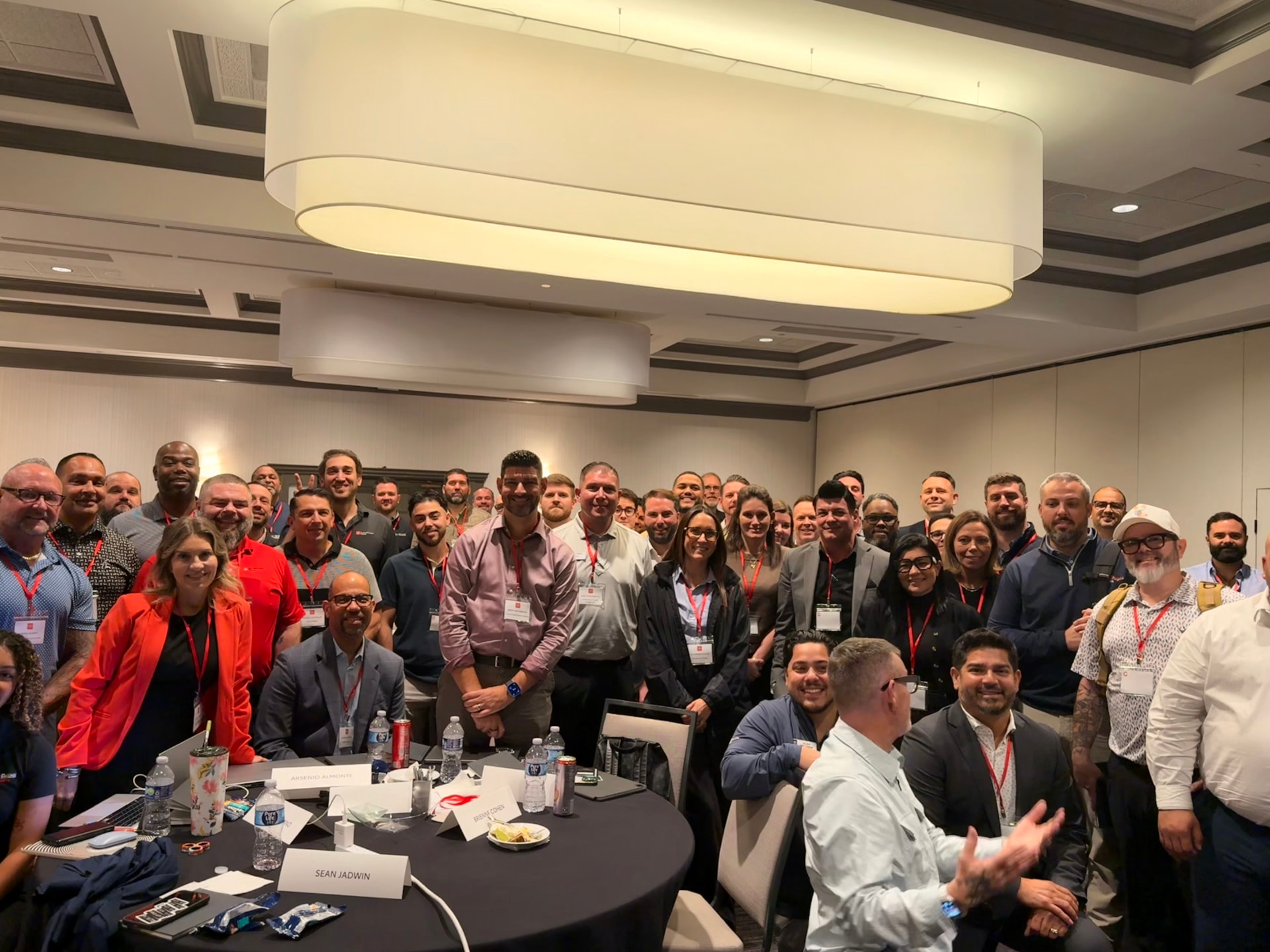
We surface what worked, what broke, and what each person is taking back to their team. Commitments get written down. Follow-up cadence gets scheduled. This is the difference between a workshop and a memory.
Outcomes
What people walk out with.
Every participant
- A personal prompt library. Drafted live and organized by task. A starter kit you extend, not a hand-out you lose.
- The RIPE framework, memorized. One structure for every prompt going forward. Simple enough to stick, structured enough to scale.
- Confidence to push back on AI. The habit of questioning outputs, spotting hallucinations, and refining until the answer is worth acting on.
- A shared vocabulary with the team. The same words for the same moves, so collaboration on AI work actually gets easier, not harder.
The organization
- A shared framework across teams. One prompting standard, one vocabulary, one direction, instead of siloed experiments.
- Reduced shadow-AI risk. A sanctioned approach replaces unvetted tool sprawl. Governance you can point at.
- Faster time-to-productivity. The lift starts the week of the workshop, not two quarters after a rollout plan.
- Working artifacts to compound on. Prompt libraries and playbooks built by your own people, a foundation the org keeps extending.
“If you want deep knowledge of AI combined with a practical understanding of how we can use it to make things happen in the real world, Brent’s your guy. His work with our group opened everyone’s eyes, to say the least.”
Industries
Built for your industry, not for a generic office.
- Automotive retail.
- Dealership groups, distributors, and OEM field teams. Sessions built around sales, BDC, service, F&I, marketing, and fixed ops realities. I do not need the industry explained to me.
- B2B marketing and agencies.
- Content, demand gen, product marketing, and creative. Usually working under enterprise IT restrictions and brand governance, which shapes what we build and how.
- Operations and logistics.
- High-volume, repetitive, judgment-heavy workflows. Intake, triage, documentation, quality review, and the reporting nobody enjoys.
- Leadership teams.
- Executives who need to make good calls about AI without needing to understand transformers.
FAQ
Questions about workshops.
- Half a day or a full day. The half day is the most common format and works well for a single department or a tight cross-functional group. The full day is right when you have multiple departments and want them to leave aligned rather than just informed. For longer arcs, there is an eight-week virtual series and multi-session programs run across a quarter or a year.
- Workshops are priced per participant, starting at $349 per person for a half day, with a ten-participant minimum. Full-day and multi-session programs are quoted based on group size and format. For on-site sessions, travel and accommodation are billed separately.
- Both. On-site sessions are better for cross-department alignment. Virtual works well for distributed teams and for the eight-week series format, where weekly sessions build momentum between meetings.
- Hands-on sessions work best at 10 to 25 people. Above that it becomes a presentation rather than a workshop, which is fine, it is just a different thing. Keynotes have no ceiling.
- The RIPE framework, a set of prompts already built for their specific role, a shared vocabulary so the team can talk to each other about this, and 24/7 exclusive access to tools made only for workshop attendees.
- Whichever ones you use. The framework is tool-agnostic on purpose, because the tool you standardize on this year will not be the one you are using in two years.
- That is the only way I do it. Every engagement starts with a discovery call and, usually, a short intake with a few people who will be in the room. Generic AI training is why most teams think AI training does not work.
- That is normal and it is fine. The framework gives beginners a starting point and gives advanced users something they were doing inconsistently. The build exercises scale, because everyone works on their own actual job.
- Yes.
- Yes, either as a virtual series or as a travelling on-site program.
Get in touch
Let’s plan your session.
Thirty minutes, no deck, no pitch. Tell me what your team is struggling with and I will tell you honestly whether a workshop fixes it.
Looking for a keynote instead? See speaking.